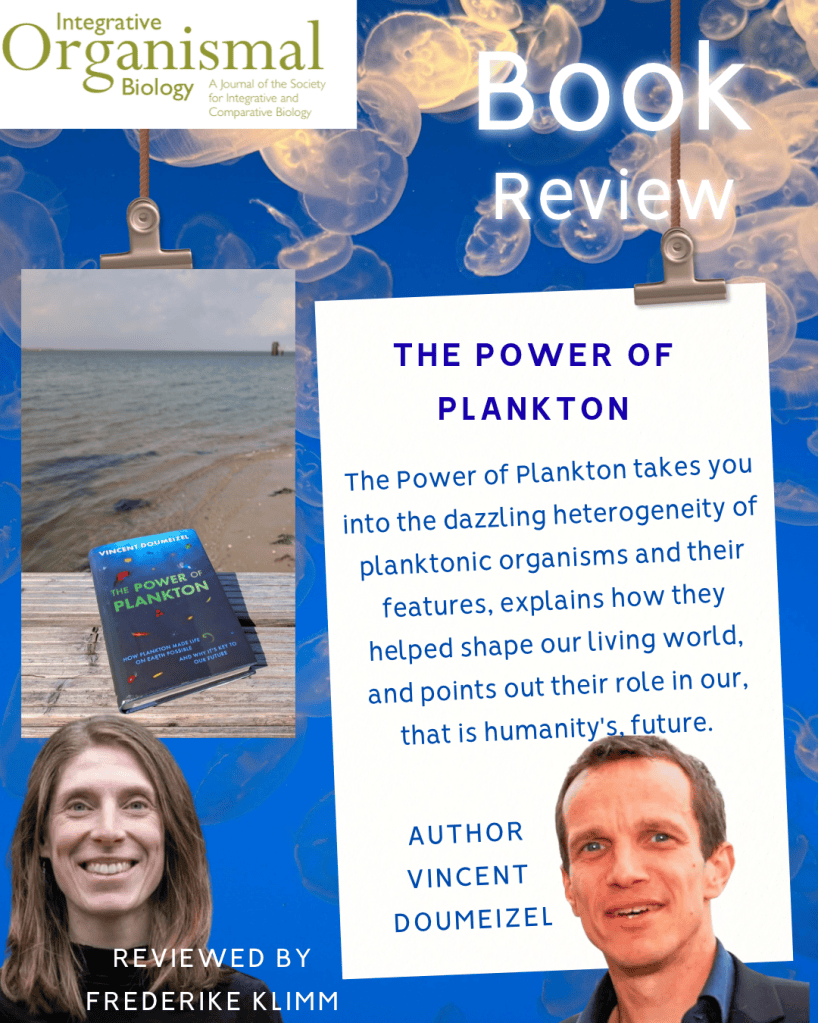
The Power of Plankton by Vincent Doumeizel (The Book Social) is a captivating book from start to finish. I was instantly fascinated by the world of these often overlooked creatures (overlooked even among biologists). The most famous representative in the public eye is probably Sheldon J. Plankton from SpongeBob SquarePants. But there is so much more to discover: The Power of Plankton takes you into the dazzling heterogeneity of planktonic organisms and their features, explains how they helped shape our living world, and points out their role in our, that is humanity’s, future.
Short chapters cover a myriad of aspects. Each chapter made me want to dive deeper into every detail. Luckily, the book also provides a list of related publications, a mixture of scientific primary sources and other formats, such as online articles and news reports. The book is well written, although readers without a natural-science background may find it dense. Clear illustrations support the text and are complemented by a couple of color photo prints in the middle of the book.
The first part of the book traces an arc from the very beginnings of life on Earth, through the evolution of multicellularity to the emergence of life from the ocean. Along the way, it reveals fascinating effects linked to plankton activity and portrays different plankton groups, from microscopic forms to krill and jellyfish. More important, it does not present a simple listing of biological characteristics; rather, it explains the role of plankton in an ecosystem context and links it to human activity.
Once I had started to read the book, it was hard to put down. The journey took me from shipwrecks, the 1900 Paris Exposition, and Polynesian sailors to the biblical river of blood, Aristotle’s red snow, and jellyfish attacks. The author himself asks, “Who needs science fiction, when we have life?” — and truly, The Power of Plankton sometimes reads like science fiction (e.g., “to prepare for landing on such an inhospitable environment, plankton selected an elite unit”). Be prepared for chapters like “Plankton that came from space and might soon return?”, “Marine viruses, killer robots that enable us to exist”, and “Protists, the dark matter of life descended from Loki, Odin and Thor.” In this book, plankton is the powerful hero that has shaped our living world for billions of years.
The second half of the book closes the arc by addressing the state of our planet today and its imminent crisis (“Plankton and humans: an invisible massacre”). It discusses, for example, how an imbalance in the plankton system threatens the (human) livability of the world and points us to plankton-based solutions for the climate crisis, the biodiversity crisis, and pollution. It shows us how plankton provides promising opportunities in fields such as wastewater treatment, bioremediation, food, health, cosmetics, and energy. As a biologist with a strong background in biomimetics, I was delighted to find that this aspect, too, is covered in a short chapter.
All in all, The Power of Plankton really took me deep into the fascinating world of planktonic life and showed me how it is linked to the history of our world and the situation of today’s planet. A true manifesto for these creatures and the need to find out more about them. The only challenge is that you may be too excited to read it slowly enough to take in all the information. Never mind: just read it twice.
Reviewer Frederike Klimm is a co author on
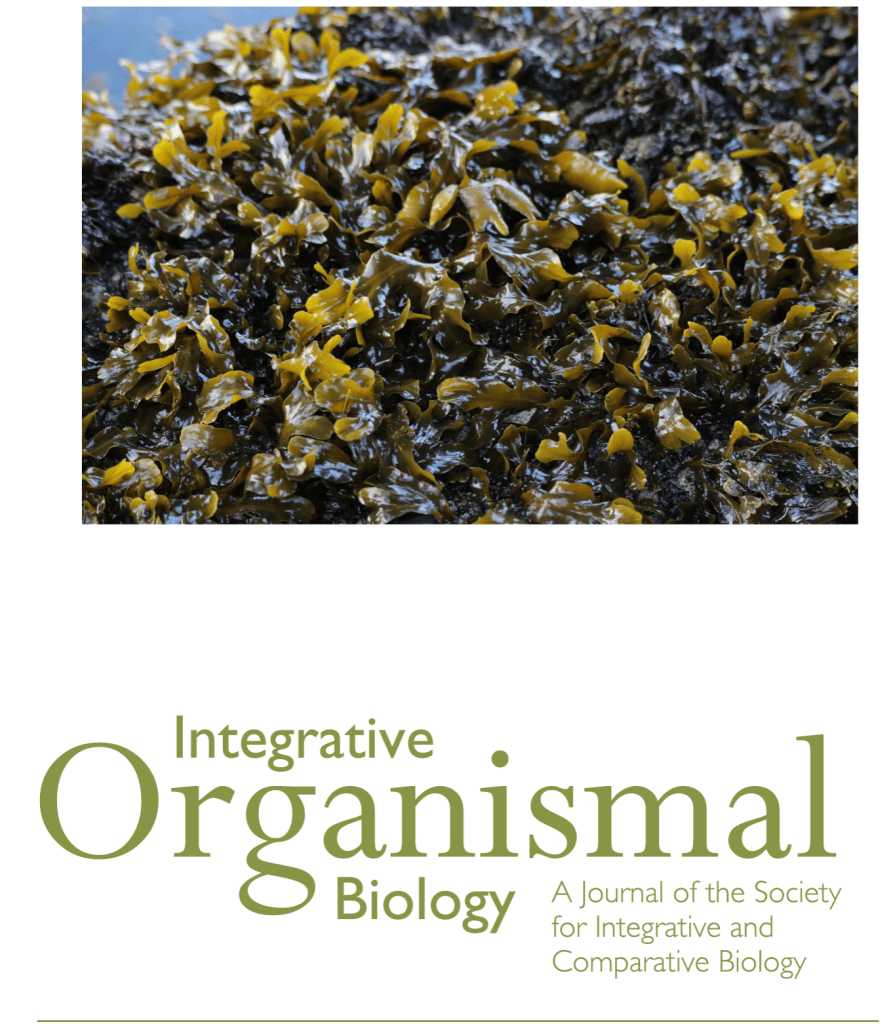
Biomechanics of the Attachment of the Intertidal Seaweed Fucus distichus Open Access
Integrative Organismal Biology, Volume 8, Issue 1, 2026, obag010,
https://doi.org/10.1093/iob/obag010
connect with Frederike.
& watch

