In lieu of watching paint dry, perhaps we should consider watching trees grow. Paint dries in minutes; a tree could take a century to reach maturity, and an oak planted today will outlive everyone reading this sentence. Trees change so slowly that we often don’t notice them living at all. They are ubiquitous in our lives, yet we tend to notice them only once they’re sawed down to stumps and hauled away. This is a strange blindness given that trees give us breathable oxygen, offer food and shelter, and support entire ecosystems. How did something so indispensable become so easy to ignore?
Look closer, and trees are anything but unremarkable. Many change color with the seasons, some produce edible fruits, and most have elaborate ways of exploiting animals to disperse their seeds. But these are familiar facts, which could be why we fail to give them serious pause. In truth, trees are not passive fixtures of the landscape, and someone who values trees as living beings can hardly dismiss them as things that just stand in the ground and look pretty.
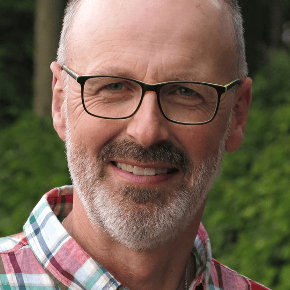
For forester and conservationist Peter Wohlleben, the most remarkable things trees do happen out of sight. He describes forests as complex societies in which trees communicate with, cooperate with, and respond to the needs of their neighbors. In his view, forests reveal a “world full of wonders” built on values that are not so different from those of our own societies: “tolerance, freedom, love, and cooperation.” Whether or not we are comfortable applying these human qualities to trees, what might we discover if we understood forests on their own terms rather than through our own assumptions?
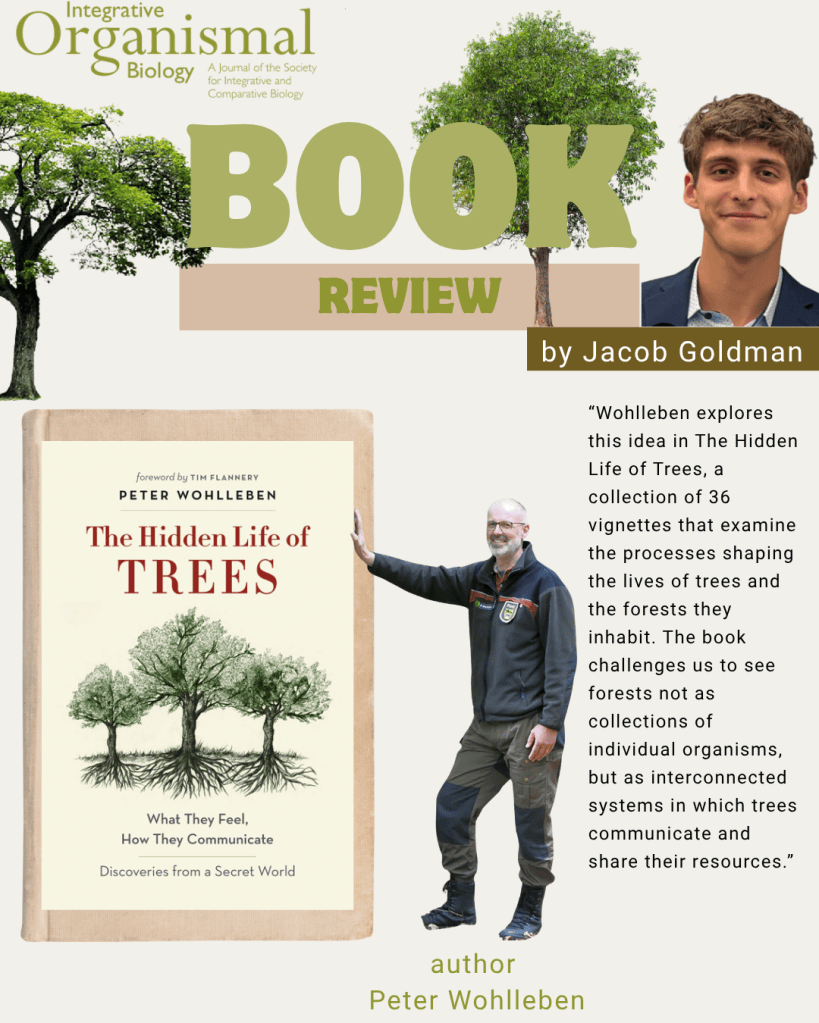
Wohlleben explores this idea in The Hidden Life of Trees, a collection of 36 vignettes that examine the processes shaping the lives of trees and the forests they inhabit. The book challenges us to see forests not as collections of individual organisms, but as interconnected systems in which trees communicate and share their resources.
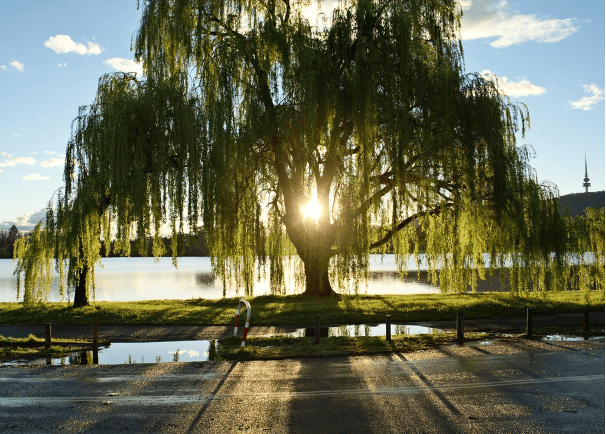
Consider what happens when a willow tree is attacked by leaf-eating insects. First, it can distinguish between harmful and beneficial insects, suggesting that trees have something resembling a sense of taste. If the insect is threatening, the willow synthesizes salicylic acid in its leaves, creating a bitter taste that deters the insects and limits further damage.
What about the attacked willow’s neighbors? It warns them, too, through scent. The attacked tree broadcasts its distress through airborne chemicals that the nearby willows pick up on. These trees can then begin producing their own defensive compounds before the dangerous insects reach them.
The willow can also send warning signals through an underground fungal network known as the Wood Wide Web.. Through these networks, trees “speak” to one another through chemical and electrical signals that influence the defensive responses of other trees. These electrical signals are similar to those found in animals and, although much slower, do a good job of warning neighboring trees of potential threats.
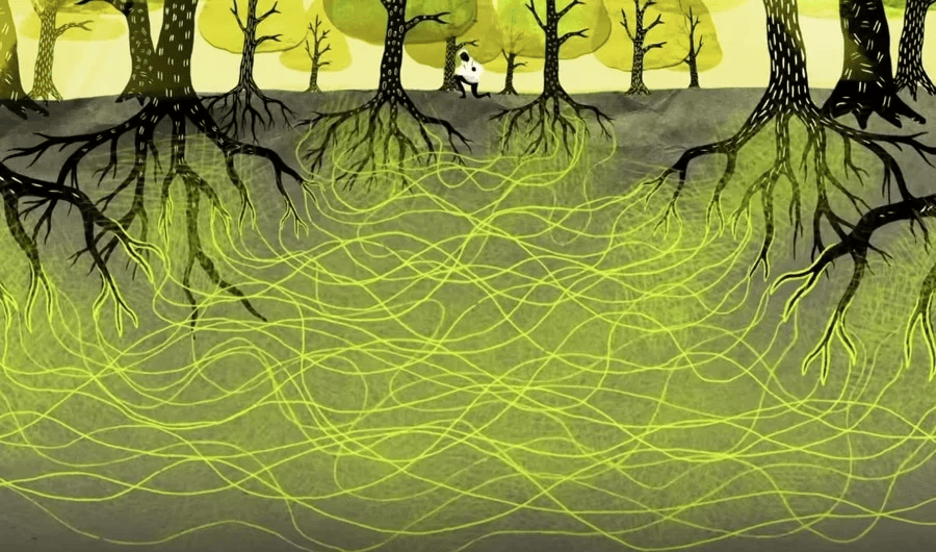
Beyond communication, the Wood Wide Web also connects trees in a way that empowers them to share water, sugars, and nutrients. These exchanges enable individual trees to respond to conditions beyond their immediate surroundings, making the forest function as a larger, coordinated system. This kind of coordination may seem like intelligence, but it is fundamentally different from human intelligence. The surprising behavior here is that trees can change their responses based on what they have experienced before. In that sense, they appear capable of learning.
Imagine a forest where winter rainfall is abundant, while summers are comparatively dry. With no leaves in the rainy winter, deciduous trees cannot generate any energy for growth. So, in the meantime, they stockpile water in preparation for the dry season, just like squirrels stockpile nuts before winter. The trouble comes with a tree’s first truly arid summer. Accustomed to dry spells broken by intermittent rain, the tree draws from its reserves at an unsustainable rate, eventually depleting them. Soon, the tree can no longer maintain the conditions needed to keep its tissues intact, and its bark splits. After this crisis, the tree responds differently to future dry periods, rationing its water to prevent injury, only at the cost of reducing growth.
Yet not every tree is equipped to survive on its own. Every forest contains older, stronger trees alongside young, damaged, or aging ones. These weaker trees need reinforcement, and the Wood Wide Web provides it. Stronger trees transfer their water and nutrients to trees in need, because in the long run, a healthy forest benefits every tree within it. Nor are the weakest trees without purpose: they contribute to the fungal network and participate in nutrient cycling, and even a modest role like filling a gap in the canopy still supports the survival of the whole.
These same fungal networks also play a role in forest reproduction. If trees mass-produced seeds every year, animal populations would thrive, and would consume every seedling before any had a chance to take root.
Instead, forests coordinate to produce enormous quantities of seeds in some years and practically none in others. By synchronizing reproduction and leaving several years of scarcity between major seed crops, forests prevent seed-eating animals from building up large populations, keeping deer and boar numbers in check much as a predator would. This gives at least some of the seeds produced in years of plenty a chance of surviving long enough to grow.
Still, only one in ten thousand seeds survives to adulthood. A young tree is raised beneath the canopy of its elders who supply it water and nutrients while sheltering it from the weather. This same protective canopy, however, starves the sapling of light. Though the sapling survives, real growth must wait, often many decades, for old age or a chainsaw to fell a neighboring tree and open a gap in the canopy above.
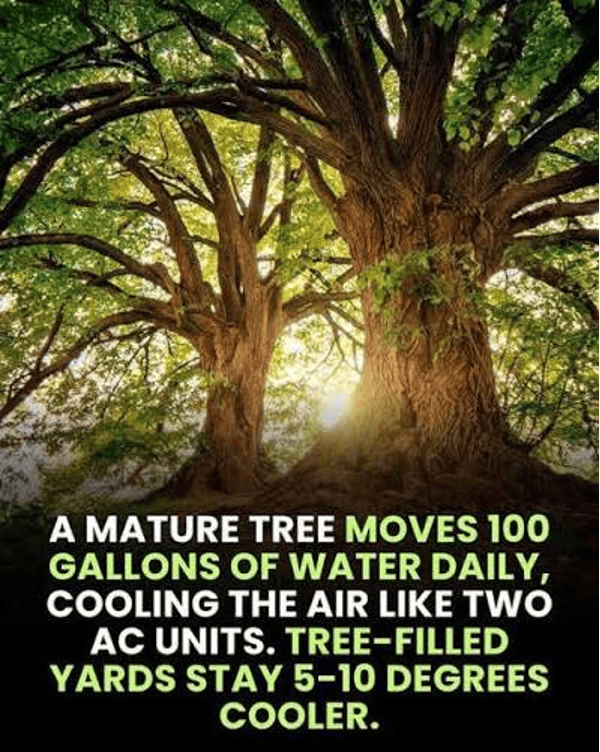
That patience pays off. The canopy’s shade has slowed the sapling’s growth, but it also creates the stable climate it needs to survive. On a hot day, step nearby and the temperature drops before you even reach the shade, since the canopy intercepts sunlight, breaks the wind, and traps heat that would otherwise escape overnight. Thus, the forest floor stays cool by day and warm after dark. That’s all passive though; the trees also actively regulate that temperature through transpiration. As water moves upward and evaporates from the leaves, it raises humidity levels and pulls heat out of the surrounding air, in the same way that sweat cools skin. A large tree can transpire 150 gallons of water in a single day. Across a hundred trees, a swimming pool’s worth of water is raised into the atmosphere in a day.
That water forms entirely new clouds.
The reason the center of every continent isn’t pure desert is because forests carry moisture farther inland. Much of that moisture begins over the ocean, and forests recycle rainwater to the atmosphere, allowing clouds to travel farther inland. This is why clearing coastal forests, as is happening in the Amazon, harms trees far beyond the ones that are cut. Less forest means less moisture reaches the interior. As the interior dries, its forests begin to die. And because dead forests can’t transpire water, less moisture returns to the atmosphere, and the drought spreads farther inland.
Taken together, these behaviors make it hard to think of a forest as just a collection of individual trees. Communication, resource-sharing, and the ability to shape local climate are not things a tree can do on its own. One tree’s condition affects its neighbors, and those neighbors, in turn, affect whether it survives. A forest, then, is not a collection of trees. It is a social security network, with parallels to a beehive or a human neighborhood.
A word of caution, though: trees do not smell, speak, or love in the human sense. The Hidden Life of Trees makes a convincing case for how complex trees can be, but the anthropomorphizing in Wohlleben’s writing, and in mine throughout this piece, is worth reading carefully. Words like “communication” are useful for describing these behaviors, but they make trees seem more conscious than the evidence suggests.
Still, for anyone drawn to the natural world and looking for a place to start, The Hidden Life of Trees will satisfy.
& read this tree related IOB read
Predicting the Impact of Describing New Species on Phylogenetic Patterns
D C Blackburn ,
G Giribet ,
D E Soltis ,
E L Stanley
, https://doi.org/10.1093/iob/obz028
Although our inventory of Earth’s biodiversity remains incomplete, we still require analyses using the Tree of Life to understand evolutionary and ecological patterns. Because incomplete sampling may bias our inferences, we must evaluate how future additions of newly discovered species might impact analyses performed today. We describe an approach that uses taxonomic history and phylogenetic trees to characterize the impact of past species discoveries on phylogenetic knowledge using patterns of branch-length variation, tree shape, and phylogenetic diversity. This provides a framework for assessing the relative completeness of taxonomic knowledge of lineages within a phylogeny. To demonstrate this approach, we use recent large phylogenies for amphibians, reptiles, flowering plants, and invertebrates. Well-known clades exhibit a decline in the mean and range of branch lengths that are added each year as new species are described. With increased taxonomic knowledge over time, deep lineages of well-known clades become known such that most recently described new species are added close to the tips of the tree, reflecting changing tree shape over the course of taxonomic history. The same analyses reveal other clades to be candidates for future discoveries that could dramatically impact our phylogenetic knowledge. Our work reveals that species are often added non-randomly to the phylogeny over multiyear time-scales in a predictable pattern of taxonomic maturation. Our results suggest that we can make informed predictions about how new species will be added across the phylogeny of a given clade, thus providing a framework for accommodating unsampled undescribed species in evolutionary analyses.
About this blog’s Author:
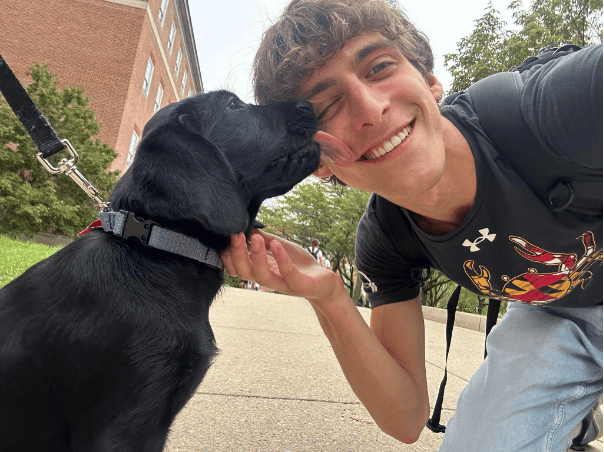
Jacob Goldman is a junior at the University of Maryland pursuing dual degrees in biological sciences and in music as a piano performance major. A member of SICB and a presenter at SICB 2026, Jacob conducted independent research at the University of North Florida in Principal Investigator Laura Habegger’s lab studying fish biomechanics. His research examined the biomechanical influence of extraocular muscles on the functional morphology of fish skulls.
Jacob has also authored chapters for the University of Maryland’s Organismal Biology course textbook. These chapters focus on the function, physiology, evolution, and diversity of neurons, brains, and sensory systems, and are currently used by the university as a teaching supplement for the course. He is also a member of UMD’s Biology Departmental Honors program, where he is working toward a thesis in biodiversity.
Alongside his scientific work, Jacob is an active pianist who regularly performs at the University of Maryland. He has a particular affinity for lieder transcriptions, and has performed repertoire spanning a wide range of styles and eras. In 2024, he was a prizewinner in the American Virtuoso music competition, earning him a performance in a recital at Carnegie Hall.
Outside of academics and music, Jacob is an avid lover of raccoons.

