Tell us a bit about your scientific journey?
I have been trained across a variety of fields in the United States and Canada. In particular, my primary focus has been on developmental biology and the evolution of vertebrates, ranging from the molecular and cellular development of fishes and mice to vertebrate genomics, including humans. Through this work, I have had the opportunity to meet numerous researchers in the United States and Canada who study vertebrate evolution and biomechanics. Their work strongly inspired me to pursue a new research direction exploring the functional roles of biarticular and monoarticular fin and limb muscles in fishes and tetrapods.
Who were your major influences(and detail a bit about how they influenced you)?
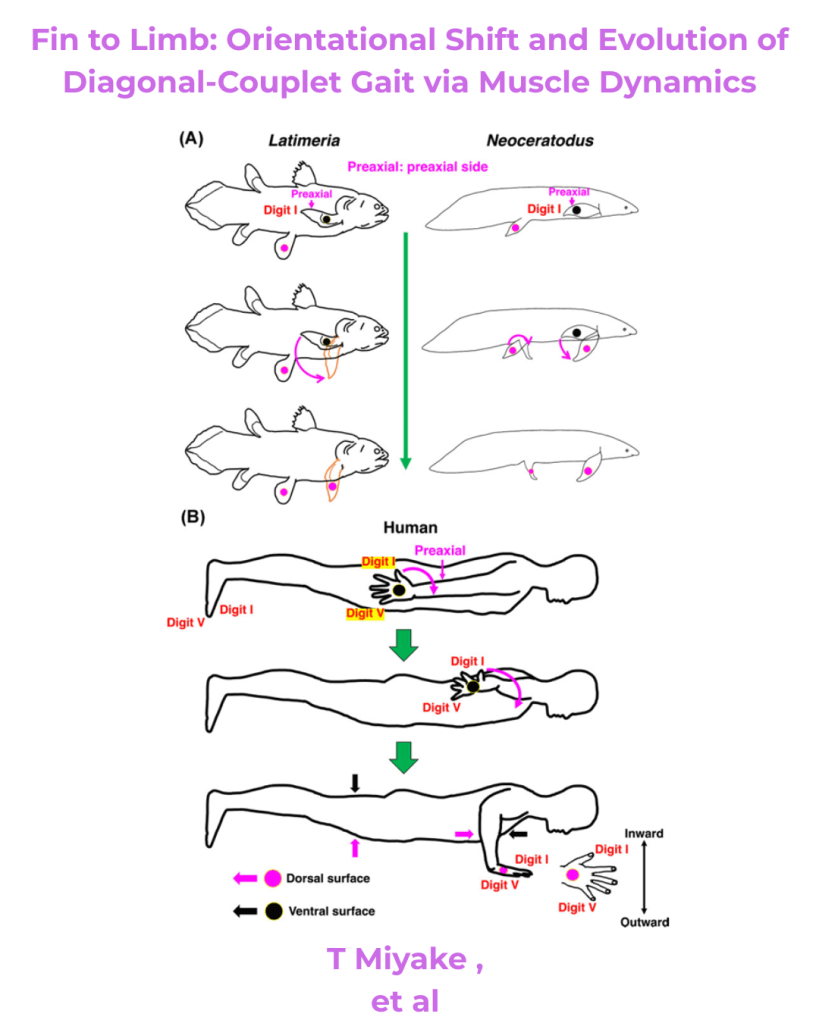
I have had several mentors, including Drs. Teruya Uyeno, Katsuzo Kuronuma, John D. McEachran, Brian K. Hall, Karl Liem, as well as many colleagues in the United States and Canada. They have been particularly influential in inspiring my interest in the evolutionary biology of vertebrates. I have also had the opportunity to work with Dr. Kouhei Ohnishi in Japan, who introduced me to engineering and bio-inspired robotics. All led me to focus on the transition from fins to limbs after I have studied comparative morphology of the coelacanth Latimeria and have been introduced to the functional engineering model of biarticular and monoarticular muscles.
What tools(tech) and or programs have you found most useful in your work and what tools are you looking forward to that are on the horizon that will assist in your work ever more?
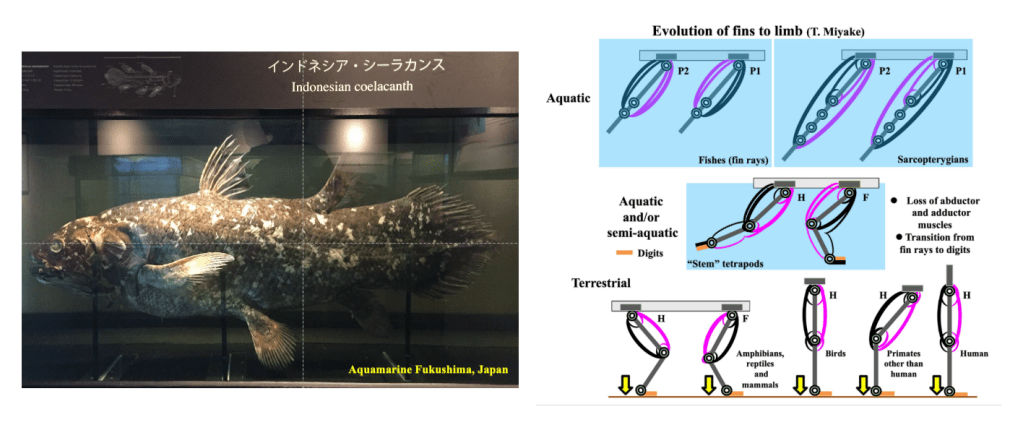
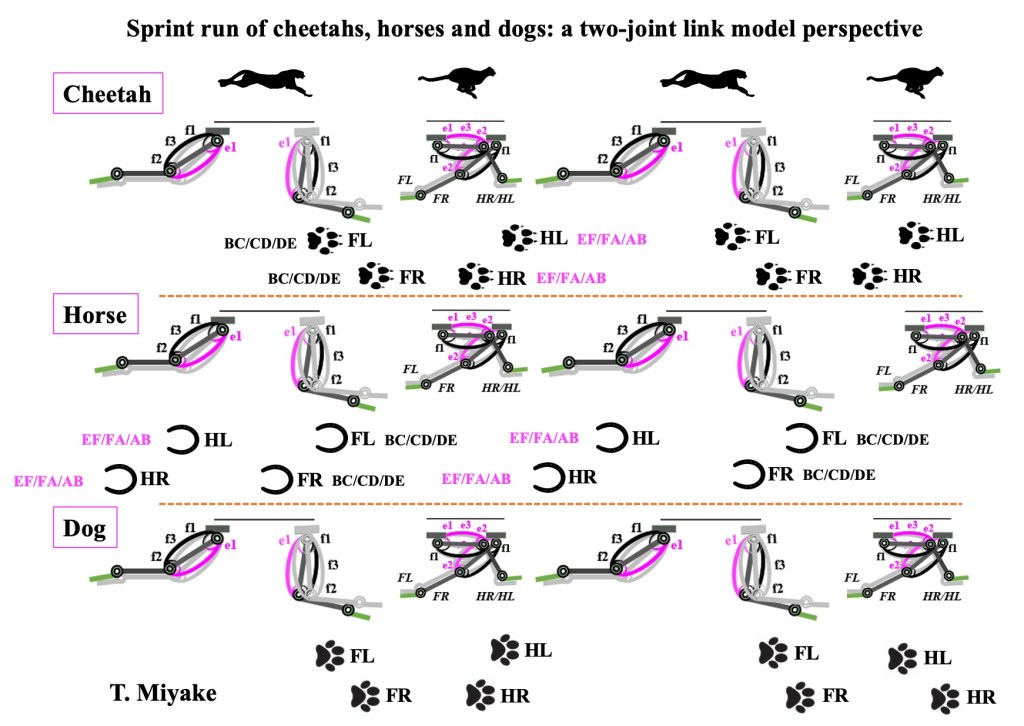
In my work, the most informative approaches have been electromyography (EMG) integrated with detailed kinematic analysis, as this combination allows muscle activity to be interpreted in relation to joint motion and force production within a functional, organismal context. From a comparative perspective, however, a major limitation is the difficulty of obtaining high-quality, synchronized EMG datasets across diverse tetrapod taxa, particularly in species that are phylogenetically informative but experimentally challenging. This constraint makes it difficult to directly compare neuromuscular patterns across lineages and reconstruct their evolutionary transformations. For this reason, I increasingly see value in combining experimental data with simulation-based frameworks, such as musculoskeletal modeling, which allow hypotheses about muscle coordination and force transmission to be tested in a comparative and evolutionary context when direct measurements are not feasible. Looking ahead, approaches that integrate EMG, 3D kinematics, and physics-based or data-driven models offer strong potential to bridge extant and extinct systems, enabling inference of muscle function across species and through evolutionary transitions. While these tools cannot replace experimental data, they provide a powerful means to extend comparative analyses and to generalize neuromechanical principles underlying the evolution of tetrapod locomotion.
Any future projects you’re excited about that you’d like to tell us about?
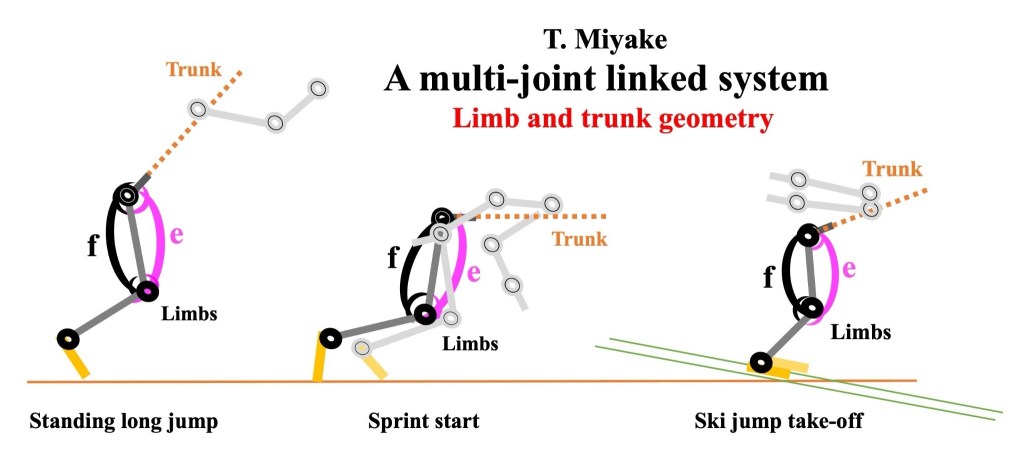
I am currently interested in extending our existing framework on limb coordination to explore how axial-limb interactions contribute to force generation and control in different behaviors. In particular, I am examining how coordinated activity between the trunk and appendicular system shapes performance in tetrapods including humans, with the goal of identifying shared principles and lineage-specific adaptations. By integrating muscle coordination patterns with whole-body dynamics, this work aims to refine our understanding of how axial contributions are incorporated into limb-driven propulsion, without assuming that these mechanisms are identical across taxa. Ultimately, this approach may help clarify how conserved neuromechanical strategies are modified across evolutionary contexts while remaining grounded in experimentally testable biomechanics.
How should readers connect with you(paragraph bio, sites, handles) ?
Tsutomu Miyake
I have trained in comparative anatomy, evolutionary biology, developmental biology, and comparative genomics in the United States and Canada. My research has focused on cranial skeletogenesis across a wide range of vertebrates, including fishes such as skates and teleosts (e.g., medaka and zebrafish), as well as chicks and inbred mice. In comparative genomics, I worked as a researcher on the Human Genome Project in the United States, where I contributed to analyses of Hox genes, Dlx genes, and other gene families across diverse vertebrates, including the coelacanthLatimeria chalumnae. In Japan, I have pursued research on the anatomy and evolution of the extant coelacanth, with particular emphasis on the musculature of the paired fins. Building on this work, especially my study of the pectoral fin musculature in Latimeria chalumnae, I initiated a series of investigations into the evolutionary transition from fins to limbs and the biomechanical roles of biarticular and monoarticular muscles in tetrapod limb locomotion. These biomechanical studies are grounded in the two-joint link model, originally developed in engineering science for human locomotion, which I have adapted and applied to tetrapod limb biomechanics. Since starting these projects, I have published five papers that facilitate the application of this engineering model to the study of tetrapod limb locomotion and evolution.
standwalk34@gmail.com

