by Dr. Nathan J. Robinson, associate of IOB author Dr. John Zardos
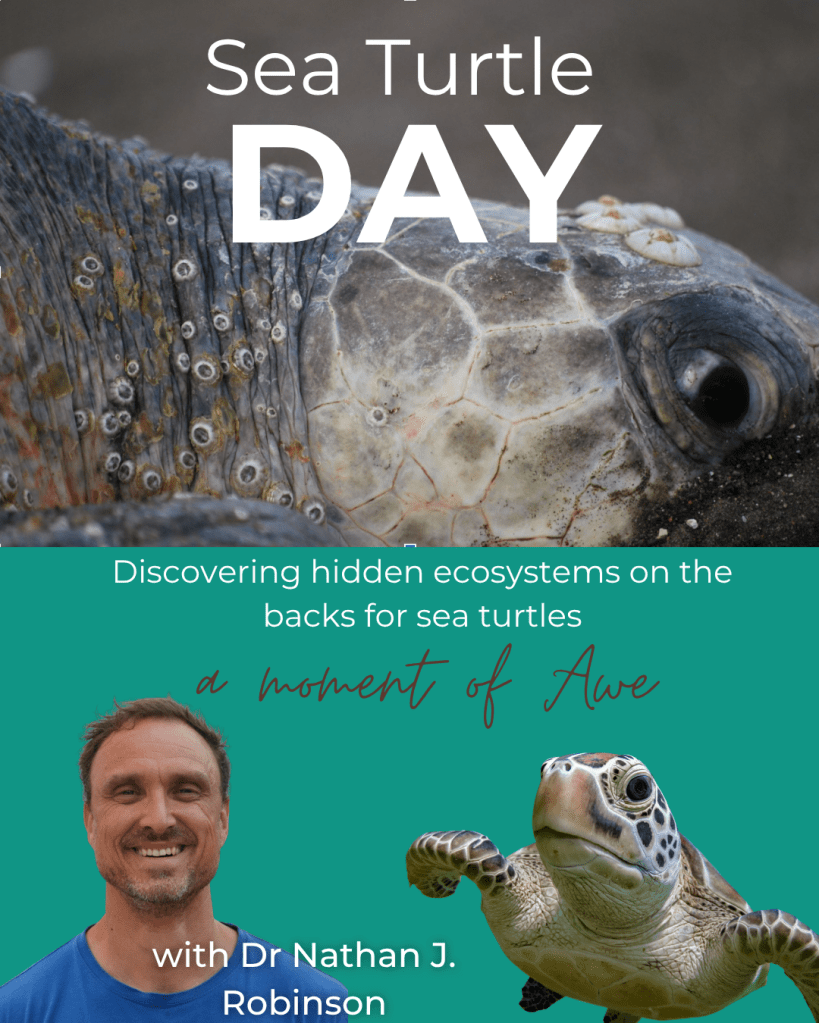
Some Native American cultures propose that the Earth is carried on the back of a giant turtle. My moment of awe came when I discovered that it is not only the “Cosmic Turtle” that carries a world of biodiversity on its shell but that this is a universal trait of all sea turtles! The hidden world of sea turtle epibionts – organisms that make their homes on the bodies of marine animals – was revealed to me in 2014 when I began collaborating with John Zardus (https://www.citadel.edu/biology/faculty-staff/dr-john-d-zardus-ph-d/), Theodora Pinou (https://www.wcsu.edu/biology/surf/faculty-mentors/pinou/), and Eric Lazo-Wasem (https://peabody.yale.edu/about/curators-collections-staff?division=29). The epibiotic communities that they showed me encompassed complex ecosystems riding through the oceans as persistent “hitch hikers” on their sea turtle hosts.
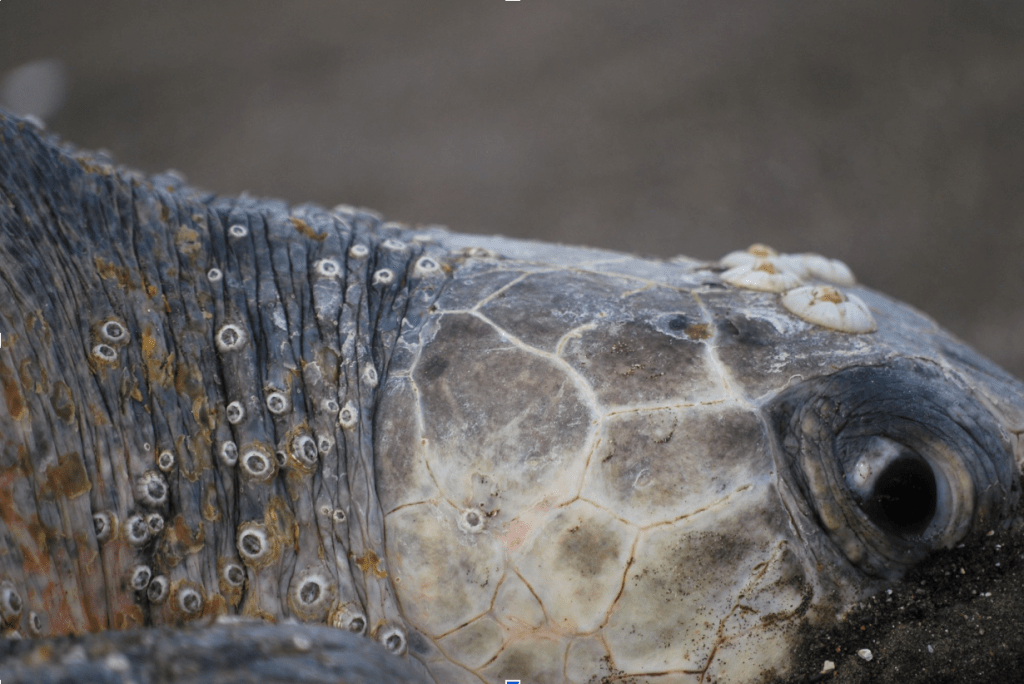
In the open-ocean, rigid surfaces are at a premium and are rapidly colonized. Just think about the layers of barnacles, mollusks, and tube worms that encrust the hulls of old boats. But this is not only a problem for inanimate objects, the bodies of living organisms are also always under assault from potential epibionts. Some animals dedicate considerable effort to cleaning themselves or have evolved unique adaptations to avoid any unwanted epibionts; however, sea turtles appear to be more “in harmony” with their persistent partners. In fact, over 374 kinds of epibionts have been reported living on sea turtles (https://doi.org/10.3389/fevo.2022.844021) and, a few years ago, we made the discovery that even more species were hiding right under our noses!
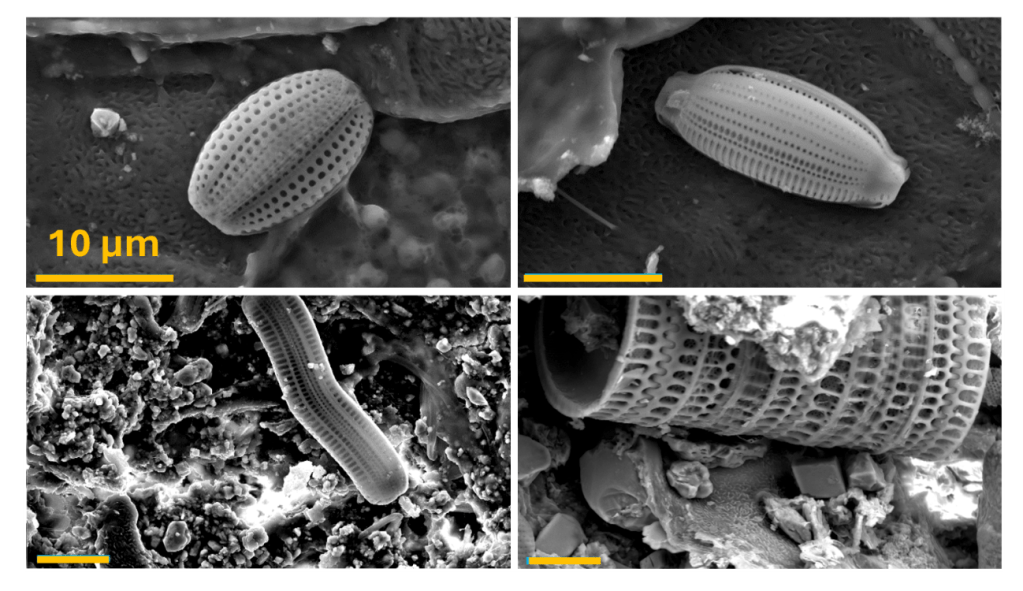
In collaboration with my colleagues, I was using a Scanning Electron Microscope to examine the microscopic surface texture of sea turtle shells (https://www.biotaxa.org/hn/article/view/85845). But as I zoomed in closer, far beyond the limits of the human eye, I started finding strange, symmetrically-shaped objects that looked like tiny UFOs. Moreover, we started seeing them on every sample we tested. Identifying them as diatoms (unicellular algae), we reached out to Roksana Majewksa (https://site.nord.no/landscapegenomics/team/roksana-majewska/), a diatom specialist. While she confirmed that these were diatoms, they included many species that neither she, nor anyone in human history, had seen before! With Roksana’s expertise we have now described many new diatom species that only live on the bodies of sea turtles and nowhere else.
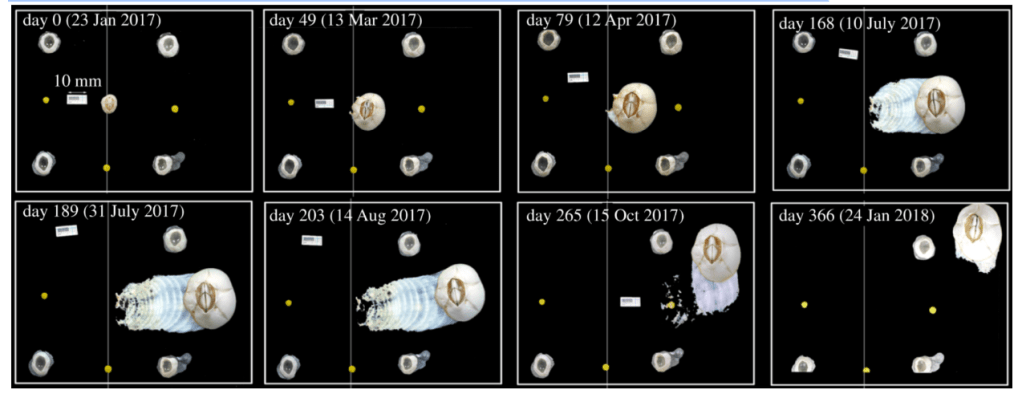
But not all epibionts are hidden out of sight, requiring complex microscopes to find! The humble barnacles are one example. The poster-child of sea turtle epibionts, it’s often rare to find a turtle without at least one barnacle and even the most conspicuous species, Chelonibia testudinaria, revealed an incredible discovery a few years back. Barnacles, as adults, have always been considered quintessentially sessile, stuck in place and never changing location after literally gluing themselves to their chosen surface. So, we were blown away when it was shown that Chelonibia testudinaria is capable of moving, slowly but consistently, across a host turtle! The only example known of its kind; this barnacle is probably the first in around 500 million years to gain mobility! This was like watching a tree uproot in your garden and walk out of your yard in search of a sunnier spot to photosynthesize! In a mix of laboratory and field experiments, we found barnacles would move against the prevailing currents to find the best feeding and mating spots on their sea turtle hosts (https://doi.org/10.1098/rspb.2021.1620). Nevertheless, the mechanism that these barnacles use to move still remains a complete mystery!
Hooked by these discoveries, we are still falling down the “rabbit hole” in search of new moments of epibiont awe! With funding recently received from the National Science Foundation (https://www.nsf.gov/awardsearch/show-award?AWD_ID=2344083) our team aims to figure out how microscopic, swimming barnacle larvae, that can only survive a few weeks in the water column, are able find a sea turtle on which to settle. But not only do they need to find the appropriate location on a turtle to settle in the larval stage, several of them live on only one species of turtle so they need also to find the right kind of turtle. Talk about finding a needle in a haystack! We are also looking from an evolutionary perspective into the various contrivances by which these barnacles glue, grip, or gouge their way to staying on a turtle. While more than a dozen species of barnacles live only on sea turtles (https://doi.org/10.1093/iob/obab002), we think our study may reveal cryptic species of epibiotic barnacles that have been masquerading in the literature as a single species for centuries now.
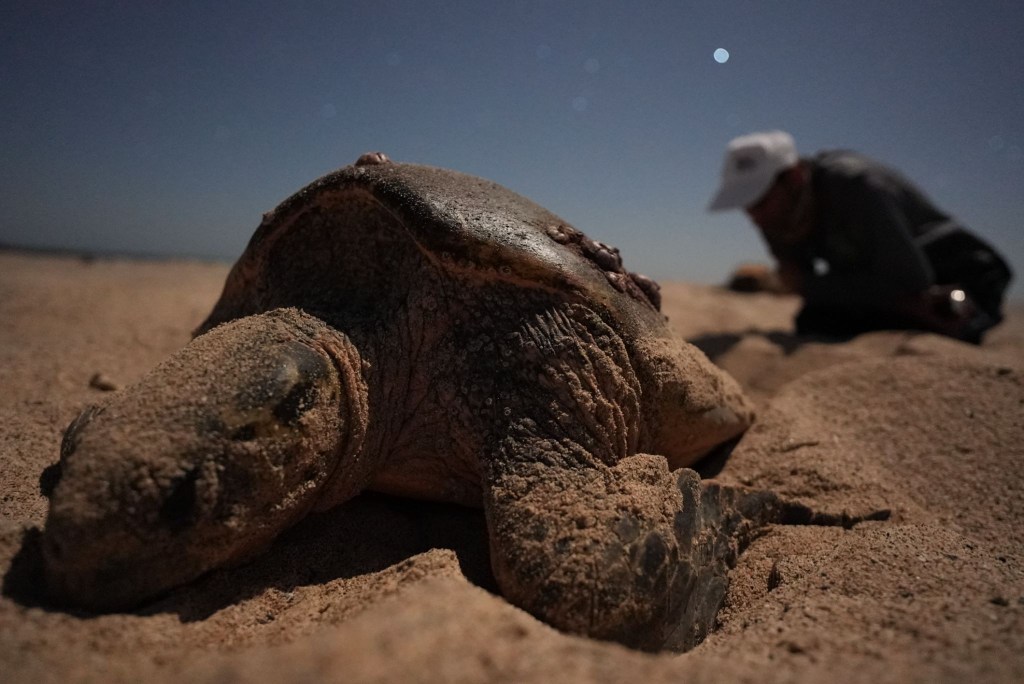
The simple truth in the world of epibionts is that the more you look, the more you find. So, while some of us peer through telescopes to find the next big discovery, I would argue that hidden within the nooks and crannies of a sea turtle are enough discoveries to fill a life with awe and wonder.
Connect with writer Nathan J. Robinson:

Dr Nathan J. Robinson is a Marine Biologist and Ocean Activist who kick-started countless campaigns against ocean plastic after a video of him removing a straw from a sea turtle’s nose went viral. He also filmed the first footage of a live giant squid in US waters, the second time this species has ever been caught alive on film. Dr. Robinson currently works for the Institut de Ciencies del Mar in Spain and is always searching for new stories to tell about the awe-inspiring animals swimming through our oceans.
Handles: Facebook, Instagram, https://www.instagram.com/drnathanrobinson/
YouTube @drnathanrobinson. https://www.youtube.com/c/drnathanrobinson
LinkedIn: @nathanjackrobinson. https://www.linkedin.com/in/nathanjackrobinson/
& read the work of Dr. John Zardus, Nathan’s associate
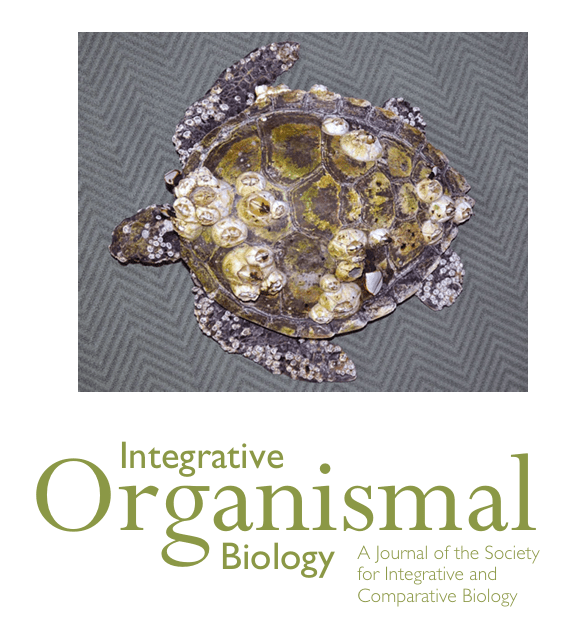
A Global Synthesis of the Correspondence Between Epizoic Barnacles and Their Sea Turtle Hosts
Open Access
John D Zardus
Integrative Organismal Biology, Volume 3, Issue 1, 2021, obab002, https://doi.org/10.1093/iob/obab002

