
Leah is a co-author of
Quantifying the Denticle Multiverse: A Standardized Coding System to Capture Three Dimensional Morphological Variations for Quantitative Evolutionary and Ecological Studies of Elasmobranch Denticles
L D Rubin, G J Fraser, M K Gabler-Smith, G V Lauder, W V Ribeiro, D F B Vaz, N Wallis-Mauro, E C Sibert

Leah is a Ph.D. candidate at The State University of New York College of Environmental Science and Forestry in Dr. Joshua Drew’s CHAOS lab and a visiting student in Dr. Elizabeth Sibert’s Paleo-FISHES Lab at Woods Hole Oceanographic Institution. She is currently funded as a National Science Foundation Graduate Research Fellow. Leah is a dedicated human ecologist investigating the complex relationships between humans and marine environments through time. Her research utilizes dermal denticles from deep sea sediment cores and coral reefs, zooarchaeological remains from shell middens, and oral histories to examine the impacts of tourism and colonization on fisheries and the role of subsistence fishing in food sovereignty and security. She has experience in marine mammal stranding response, natural history collections management, and high school science education and is passionate about mentoring, working with undergraduates and high school students to foster curiosity, develop innovative projects, and explore historical perspectives. When Leah isn’t in the lab, you can probably find her somewhere in Maine, swimming, fishing, and ideally eating blueberries.
Below, Leah tells us a bit more about herself, her work and her scientific journey:
When did you know you wanted to become a scientist?
I don’t actually remember a time when I didn’t want to be a scientist! My parents love to tease me that in elementary school when we were asked to write about what we wanted to be when we grew up I wrote that I wanted to be an “ologist.” As a kid my dad worked at the New England Aquarium so growing up behind the scenes, and in museums and on the beaches around Boston where I got to spend hours watching scientists, aquarists, and educators was key. I am an apple that didn’t fall far from the tree, my mom is a food anthropologist and my dad works in science education. They spent lots of time getting me outdoors and answering my millions of questions about how the world works. From the beaches of Boston and Quincy to lakes in Western Maine I swam, fished, examined shells and pollywogs and was obsessed with listening to stories from my elders who had known these places for generations.
I also have learning disabilities and school was really hard for me so a lot of my earliest and most important scientific learning was place-based, hands-on, experiential, and guided by inquiry. In high school I had an incredible science teacher, Ms. Daley, who was an advocate for me, fostered my love for science, and helped me develop critical thinking skills. Ms. Daley made explicit connections between the science we were learning in the classroom and real world problems. She encouraged us to think about the social structures and power that shape how we understand science and how we can use science as a tool to solve those same real world problems!
Detail for us a bit about what led you to be involved in your current research:
After high school, I went to a tiny college in Maine called College of the Atlantic (COA) where there is only one major, Human Ecology. In my second year, Dr. Loren McClenachan gave a guest lecture which sparked my love for historical marine ecology. Later that year Dr. Elizabeth Sibert gave a guest lecture and I asked if I could come visit her lab and I’ve been working with her ever since! Like a lot of undergrads who want to get involved with science, I couldn’t take unpaid science internships; I needed the money I made working in the Bar Harbor tourism industry in the summer. Dr. Sibert was able to hire me during my school breaks so I spent the rest of college talking to fishermen, working with bones in the school’s taxidermy lab, and working with Dr. Sibert at Harvard University studying dermal denticles. Dr. Sibert and Dr. McClenachan both gave me advice about grad school and helped me find my current advisor.
In 2o21 I joined Dr. Joshua Drew’s Coupled Human and Organismal Systems (CHAOS) lab at The State University of New York College of Environmental Science and Forestry. I’m currently a PhD candidate in the CHAOS lab and a visiting student in Dr. Sibert’s Paleo-FISHES lab at Woods Hole Oceanographic Institution where I’m studying past human and fisheries dynamics through ichthyoliths – “fish rocks” – i.e. the hard bits left behind as a fish lives and when a fish dies (including dermal denticles, otoliths, and teeth). The cool thing about historical ecology is that it is inherently multidisciplinary and a team sport. In addition to the work I conduct in the Paleo-FISHES and CHAOS labs, I’m also involved in archaeological research with Dr. Bonnie Newsom at the University of Maine and river herring research with the Sipayik Environmental Department.
In your vast array of experiences, which type of research did you find to be the most challenging and how did you meet those challenges?
In my experience, the hardest type of research is the research to decide what to research! When I got to grad school I had dozens of questions I was excited to dive into and I got the chance to try out a lot of different methods, fields, locations. In my 10 years of research, I’ve spent months on an offshore island in the Gulf of Maine (if you’ve seen Lighthouse – it wasn’t quite that wild but living with a small group of people without internet or the ability to hop in your car and get away from work for a second is hard), I’ve traveled to Fiji twice to conduct interviews and collect sediment samples (permitting backlogs and getting COVID mid trip were not ideal), and I’ve worked in Maine on diadromous fish which can be politically charged and often sits at the intersection of conflict between different state and federal agencies, tribal and non-tribal fishing rights, and folks on either side of the fight over hydroelectric power and dams. Every research experience, good, bad, ugly or not the right fit, is a data point though! Finding out what questions motivate you, what local community priorities are, which methods you can use, and where you want to do your work are all processes. Science is iterative and there are tons of dead ends, issues with timing and funding, etc. so getting comfortable with the non-linearity and unforeseen barriers has been a vital reframe for me during my PhD.
Who are some of your influences in the field and what do you hope to draw from, in your time either working alongside them or studying their work, that you’d like to continue to utilize in your own science?
Loren McClenahan was really my first introduction to historical ecology and like so many other historical ecologists in my generation, she got us hooked! Her multi-methods approach pulling from interviews, historical photographs of trophy fish, and nautical charts is really inspiring and she’s a huge proponent of the importance of historical data for marine conservation. My research is grounded in Indigenous archaeology, human ecology and critical ecology frameworks so I get to pull from and work with a diverse team including fishermen, historians, biologists, geologists, anthropologists, fisheries managers, people who work in tourism, and more! Dr. Tony Sutton (University of Maine), Dr. Erin Dillon (the Smithsonian Tropical Research Institute), Dr. Iain McKechnie (University of Victoria), Dr. Jessica Lueders-Dumont (Boston College), and Dr. Suzanne Pierre (Critical Ecology Lab) have also all influenced my research and I feel really privileged to be a student of their work.
In Maine, I’ve spent two alewife seasons interning for the Sipayik Environmental Department and working under the leadership of Ralph Dana and Chris Soctomah and I’m also currently working under Dr. Bonnie Newsom on an archaeology project. Working under Indigenous scientists and archaeologists has been the shaping force of my graduate research and I’ll continue working with local, tribal and descendent communities to identify historical research priorities, conduct research, develop suggestions and applications of results, and disseminate results when appropriate.
My three *must reads* for someone hoping to understand my research and where I want to direct my future work are:

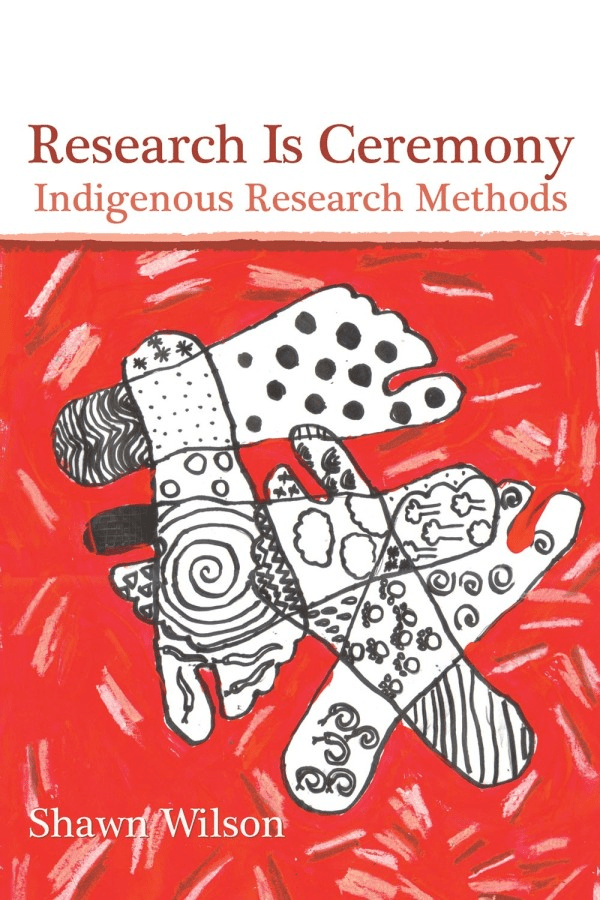
Research Is Ceremony: Indigenous Research Methods by Shawn Wilson
What are your goals for future research projects?
Right now I’m working through a bunch of sediment from Fiji, where the CHAOS lab works with Dr. Amanda Ford’s lab out of the University of the South Pacific. I’m picking out dermal denticles and teeth (parrot fish teeth are awesome by the way – check out Katie Cramer’s 2017 paper Prehistorical and historical declines in Caribbean coral reef accretion rates driven by loss of parrotfish to see pictures and learn about her work). I’ll be using the code we published in IOB to describe the different community compositions between a shallow reef environment and a deeper shark diving site. I’m also really excited about some upcoming collaborations between the Paleo-FISHES lab and Dr. Rachel M. Winter. Dr. Winter is currently at the University of Copenhagen where she is doing some really exciting marine shagreen research. I’m also hoping to do more education and outreach in the near future. I co-taught a course on ethical collection practices with Dr. Katherine Newcomer-Lawson, currently a biologist with the New York Natural Heritage Program, and I’d love the chance to teach that course again and/or guest lecture on any of my research topics – including the dermal denticle research that just came out in IOB!
I think my biggest goal for my future research is to really ground myself in local place-based work so I’m looking forward to continuing working with the Passamaquoddy tribe in Sipayik and the Gulf of Maine River Herring Network to learn what local research priorities I can best support – whether that’s identifying historical fishing sites, developing historical baseline estimates for species of cultural and/or commercial importance, or counting fish and otolith annuli.
connect with Leah via LinkedIn.
 Integrative Organismal Biology