by Stephanie Amaya, 4th year biochemistry & Italian major at Wellesley College
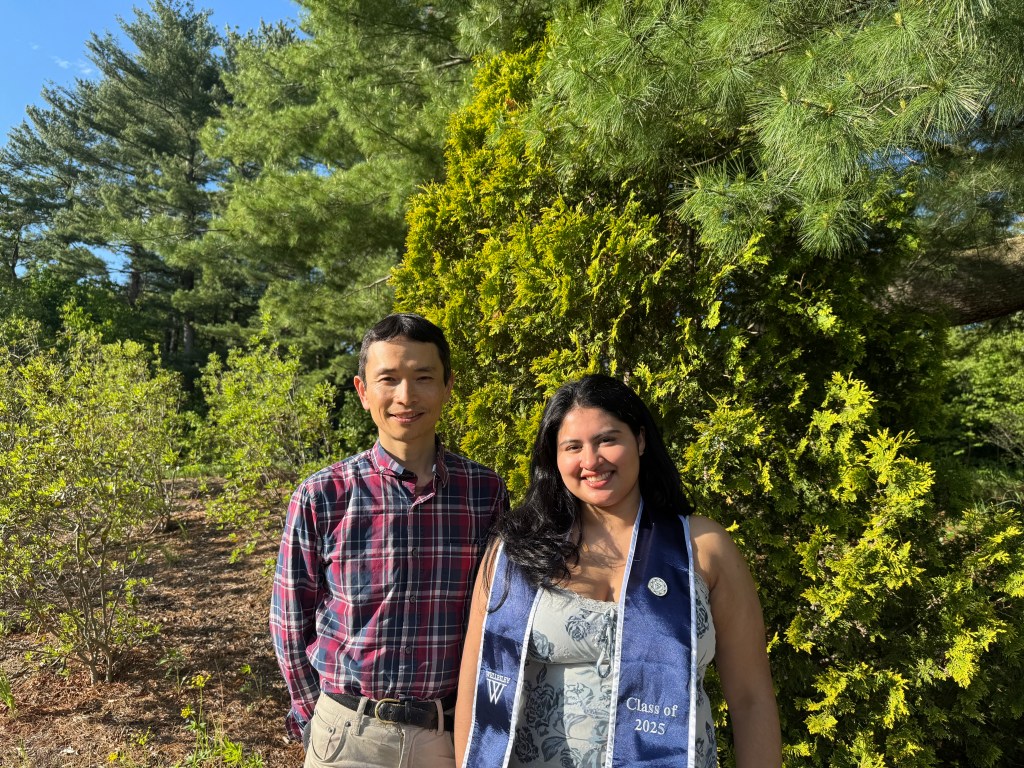
Teaching is no easy task, whether it involves dissecting difficult concepts in a poem or walking through the longest mathematical equation. Students have different ways of learning, so professors must try different techniques to share knowledge. What happens in the classroom is a small fraction of what many professors do. Some of the many roles professors take on are advising on course registration, helping plan future career goals, and offering study tips. Professors don’t just teach, they inspire future thinkers by guiding them to success. While I have come to appreciate the extensive amount of work professors do, my admiration reached a new level due to this professor.

Yui Suzuki is a professor of Biological Sciences at Wellesley College who uses insects to study evolutionary developmental biology. I had the great pleasure of working in his lab since my first year of undergrad through the First-Year Apprenticeship Program. This program allows students who lack laboratory research experience in high school to shadow a research group. As a first-year student, whose high school did not provide research laboratory experience, I was curious and excited, but worried I did not know enough or would not belong in a research lab. My nervousness was only heightened when I realized my professor was the biological sciences chair, had published numerous journals, and had worked at Wellesley for years. This professor was knowledgeable, notable, and respected.
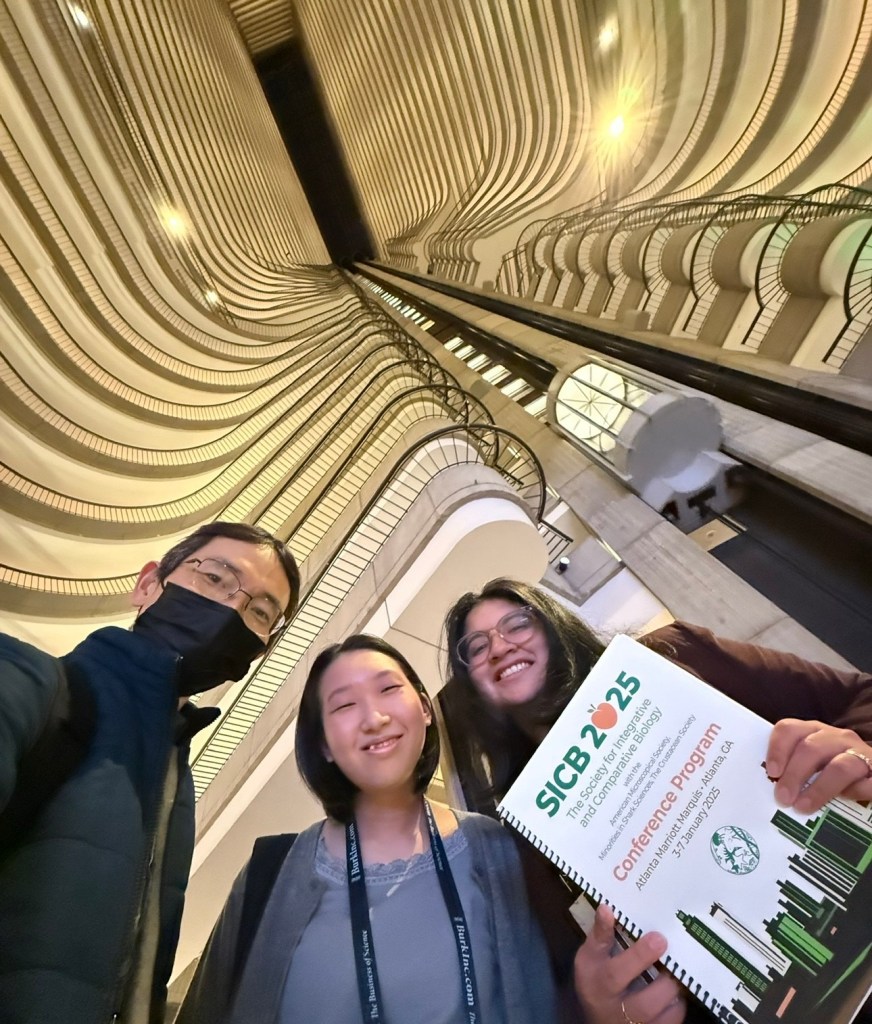
I was introduced to everybody in the lab and noticed that all the students were incredibly nice. They would ask about my day and give me suggestions on what courses I should take or what professors were really passionate about their work. Interestingly, I noticed that their kindness was an extension of the expectations Dr. Suzuki had placed in the academic setting. I began hearing stories from everybody in the lab. Some would comment that they would ask Dr. Suzuki questions to ensure they understood the biological content from other courses. Sometimes, he would use elaborate methods like using play-dough to describe archaic organisms or a Mr. Potato Head to explain evolution.
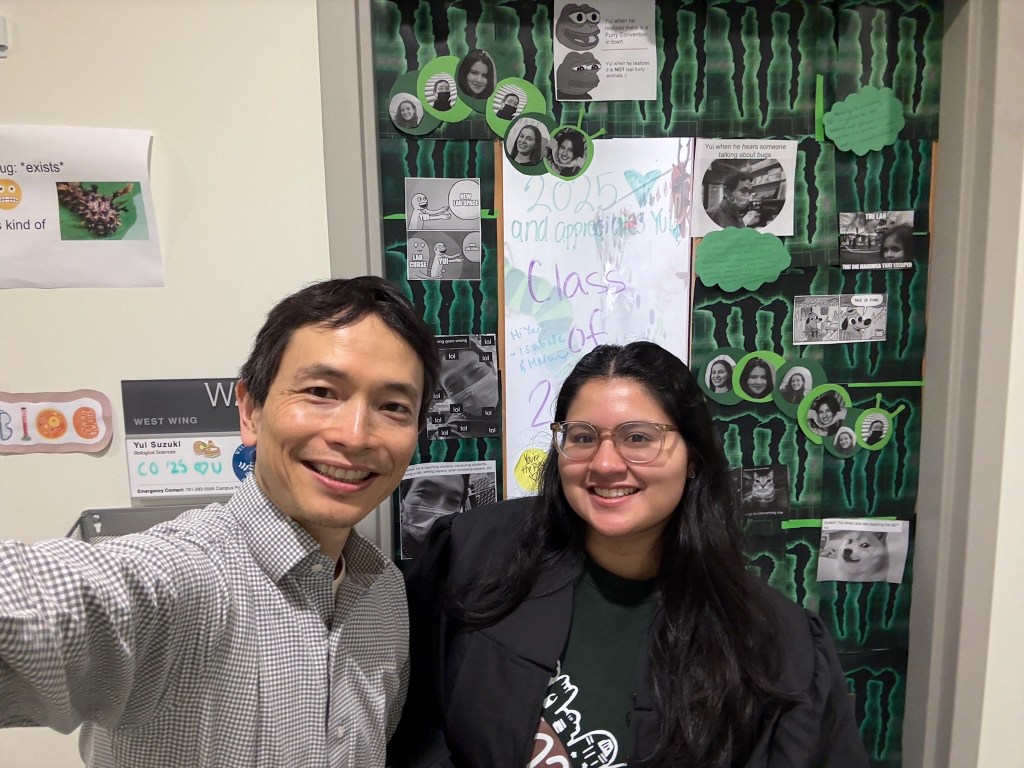
Others commented that Yui helped them plan out their four-year schedule. As I reflect on my journey from meeting everyone for the first time to now, as a Wellesley graduate, I have come to realize that Yui Suzuki has helped me through all the steps of my undergraduate career. Dr. Suzuki has and continues to guide his students to the best of his abilities.
While he has helped me in my academic career, he has especially encouraged my desire to pursue a PhD. Many times, as a first-generation college student, I have felt unsure about what my next steps should be. “Should I pursue graduate school? Is it too expensive? Should I do a master’s or PhD?” are all questions I remember asking Yui as soon as my friends started to talk about life after Wellesley. Nervous and confused about the future, Dr. Suzuki not only acknowledged my feelings but also shared his own experiences and emotions throughout his academic career. Having a professor who genuinely took an interest in his students’ lives and their perspectives made me feel heard and never alone.

After gaining confidence in the lab setting, Dr. Suzuki knew I wanted to research chronic endocrine disorders, so he allowed me to develop my own research questions. One of them was feeding various concentrations of metformin to the Tobacco Hornworm and observing their physical impact. There were no significant findings, apart from observing slower development. While I was upset about the outcome, Dr. Suzuki pushed me to continue thinking about new projects that would excite me. With his help, a new project focused on the production of insulin was started and passed down to other lab members after my graduation. The fact that Dr. Suzuki entrusted me to start developing research questions gave me the confidence to lead scientific inquiry.
Although I first saw him as knowledgeable, notable, and respected, I now understand that he is much more: compassionate, encouraging, and deeply invested in his students’ success. The positive impact he has had on me and other students is undeniable. He made us feel supported, understood, and although he may have high expectations, he does it for our growth. Dr. Suzuki is no longer my professor, but he will always be a mentor and a friend. Knowing that I have a teacher like him in my corner makes me feel confident in my ability to apply to doctorate programs in the future. Educators do not just forge academic paths, but teachers like Dr. Suzuki help build a sense of belonging, purpose, and belief in ourselves.
Blogger/scientist Stephanie Amaya often blogs for ICB (our sibling primarily proceedings journal)
Read another of her posts.

 Integrative Organismal Biology