by IOB coauthor and artist, Dr. Tosha R. Kelly, Research Associate, Kent State University
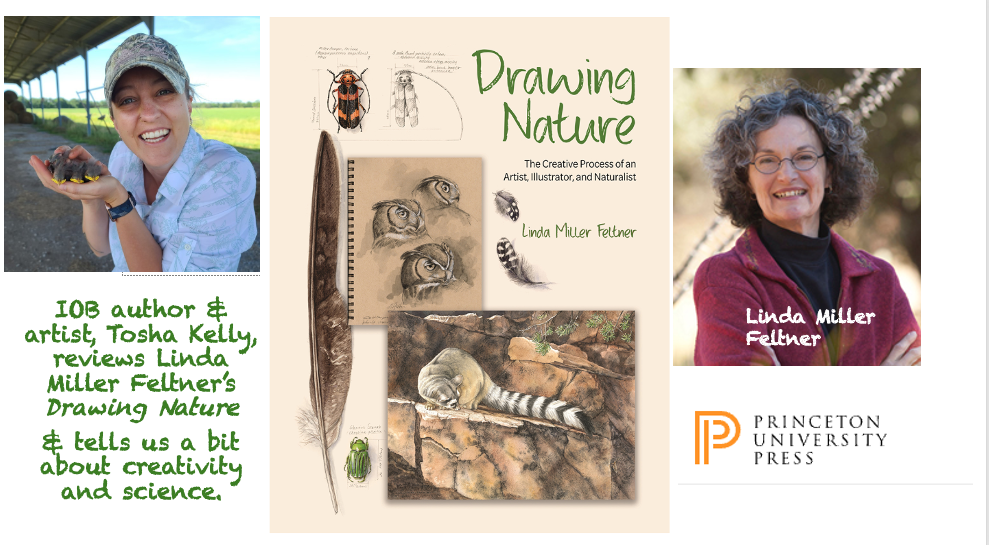
At IOB, we like to highlight not only our author’s science but also interests that intersect and foster their science. Tosha Kelly, coauthor of No Guts About It: Captivity, But Not Neophobia Phenotype, Influences the Cloacal Microbiome of House Sparrows (Passer domesticus) , has written a wonderful piece below noting the wonderful attributes of Drawing Nature by Linda Miller Feltner, but also her own work and philosophies about how art and science intersect.
At 18, I was at a crossroads to pursue biological sciences or visual arts for university. Because sciences offered a stable career path and I could still practice my art on the side, I opted for the former. This decision felt like I was closing a door on one passion in order to pursue the other, but now, a BSc, MSc, PhD, and a postdoc later, I reflect and see how my passion for art and science synergize and reinforce one another reciprocally (Fig. 1).
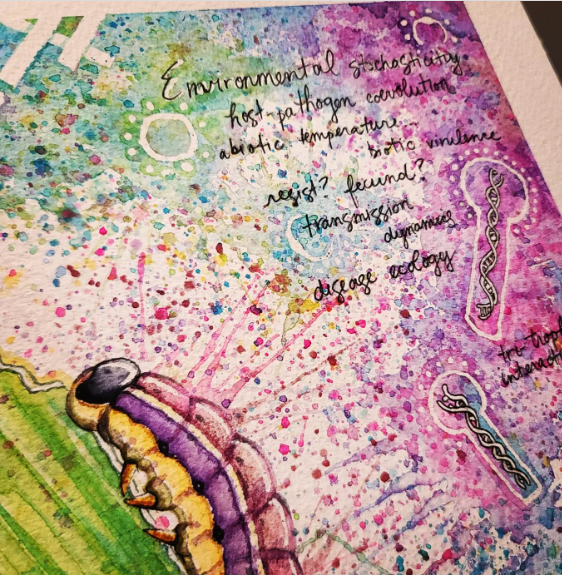
Both art and science are creative processes. Art is creative by definition, “the expression or application of human creative skill and imagination” (Oxford Languages), while creativity as a research scientist is masked by words such as “experimental design”, “modelling”, or “hypothesis”. Without a doubt, the scientific process is primarily driven by logic and scientific fact, but an ability to think about a question or problem creatively, outside of the box, or from different perspectives can offer novel solutions and propel scientific fields forward; creativity is a pillar of ingenuity. Creative innovation in biological sciences include, but are not limited to, the use of retroviruses to deliver gene therapy (Williams et al. 1984), polymerase chain reaction (Mullis et al. 1986), using isotopic signatures to track molecules in a tissue or organism (radioactive tracers; (Chiewitz and Hevesy 1935)) or uncover continental animal migrations (stable isotope ratios; (Hobson and Wassenaar 1997)), the invention of vaccines by Edward Jenner (1976), and their advances to date (i.e., mRNA; (Karikó et al. 1999; Weissman et al. 2000)).
I must note, in an age and time that threatens DEI initiatives, that a diverse and inclusive workplace also promotes innovative solutions to a problem through different worldviews, life experiences, and thought processes. Diversity, equity, and inclusion (DEI) is a topic beyond the scope of this piece, but you can read more about the importance of DEI in research and science in some select resources listed at the end of this piece.
Nature fuelled my pursuit of understanding living things and, in turn, my career as a biologist; nature was also my first ‘muse’ of artistic expression. So, it is no surprise that I now have a copy of Drawing Nature (Linda Miller Feltner; https://www.lindafeltner.com/) on my desk, that details “the creative process of an artist, illustrator, and naturalist.” Linda is an artist and an educator that flaunts scientific accuracy in her art, a kindred spirit that shares birds as their spark.
As I studied her creative process, I note four principles from Linda that both art and science benefit from:
- Repetition, repetition, repetition. Repeatability is a standard for science (replicates, high sample sizes, low p-values), and Linda notes that repetition trains eye-brain-hand coordination (p. 20). Deliberate, repeated practice improves performance (Ericsson et al. 1993), be it for sketching, writing, researching, or physical activity.
- Details and documentation. My lab and field notebooks are riddled with dates and times, why shouldn’t my art sketchbooks? Linda takes measurements (p. 13, feather lengths), notes proportions (p. 14, bill shapes and sizes; p. 25, “how many heads high”), and makes details scientific in-/accuracies in her repeated sketches. These notes can be referenced later to inform the final creative design, the same as laboratory notes inform the methods for and appease reviewer comments of a scientific publication.
- Let go of perfectionism in the moment. Sketching anything is better than sketching nothing at all; it is the experience that matters, not necessarily the final product (p. 4). I relate this best to scientific writing. Getting your ideas and connections written down poorly is better than not having written them at all. Actively engaging with your activity better trains your brain better than passively thinking of it.
- Bonus – don’t erase mistakes. Making mistakes and learning from them is integral part of the scientific process. Erase the mistake, erase the lesson. Tracing paper can help you retain the components of each sketch that you like and combine them into a final product. Likewise, saving multiple versions of your manuscripts reduces the likelihood of re-writing and permits you to look at your past thought processes.
One afternoon in between research positions, I was inspired by these lessons and put them into practice in my backyard that supports a healthy ecosystem of birds (16 species to date). My lead strikes the canvas only a few times before I make my first mistake, and, after a few contemplating breaths, I successfully resist the urge to erase it. Instead, I move on and start another sketch. When the target flies off, satiated by the luscious store-bought seeds (house sparrow) or to cache the seed for later (black-capped chickadee), I move on to a different sketch. After completing a few, I begin noting the species for each replicate to ensure species’ accuracy (Fig. 2).

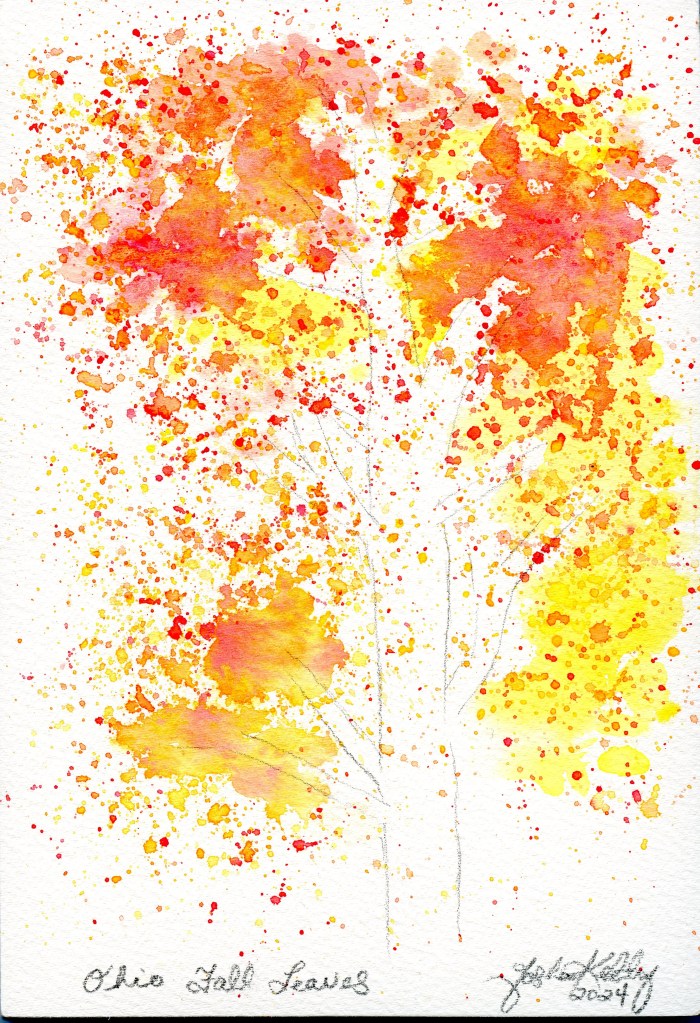
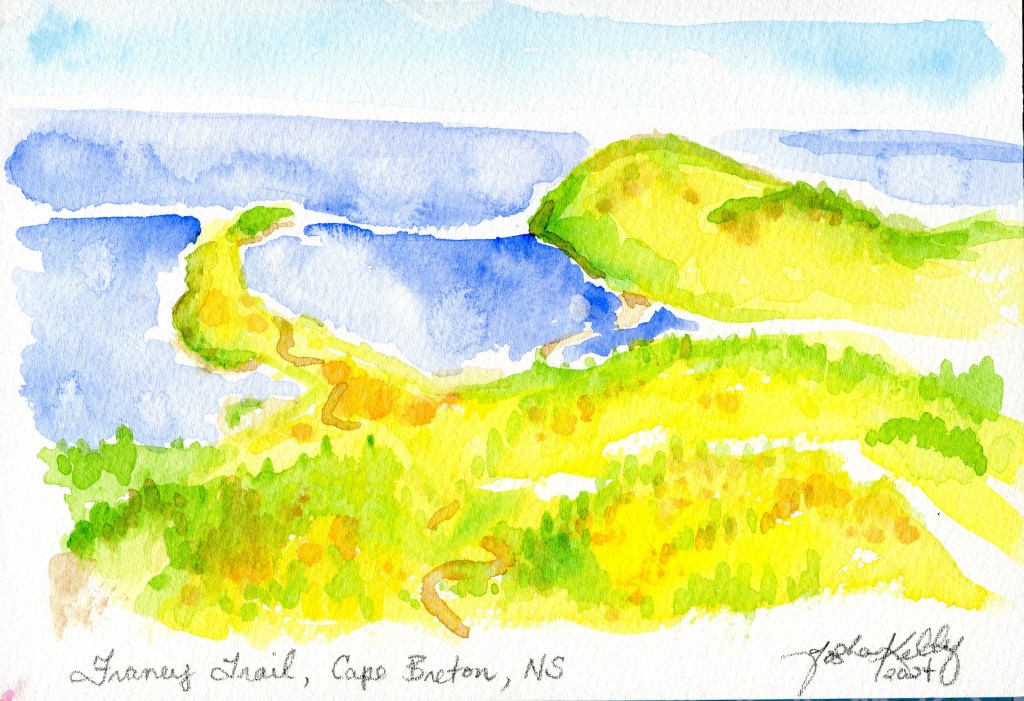
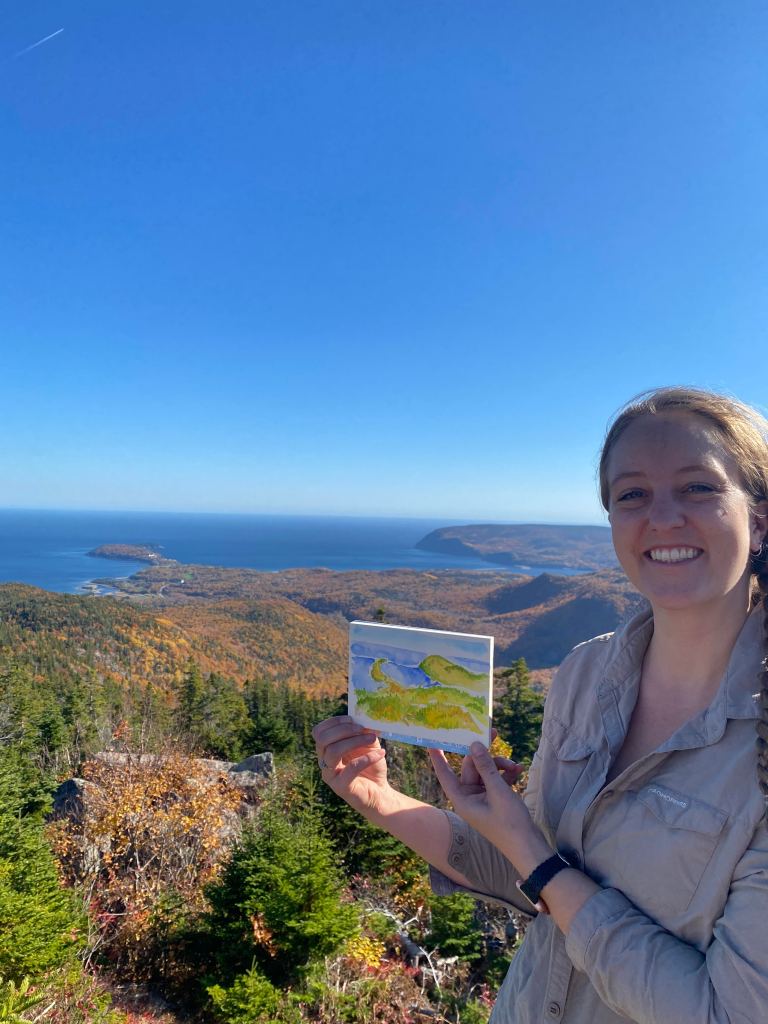
This practice was refreshing, humbling, and grounding. I was able to reflect on how I have previously used some of these principles to develop the composition for my pieces (Fig. 3). I admit, however, for the sake of time and accuracy, I trace the primary image for my paintings, and I’ll probably continue tracing for practicality of commissions. Nevertheless, this practice reinforced these principles and facilitated a new practice: painting watercolour landscapes on my hikes (Fig. 4), a unique memoir to document my wanders in the wilderness. I look forward to learning more from Linda in Drawing Nature; admittedly, I felt enough inspiration to write this article after reviewing the chapter on birds.
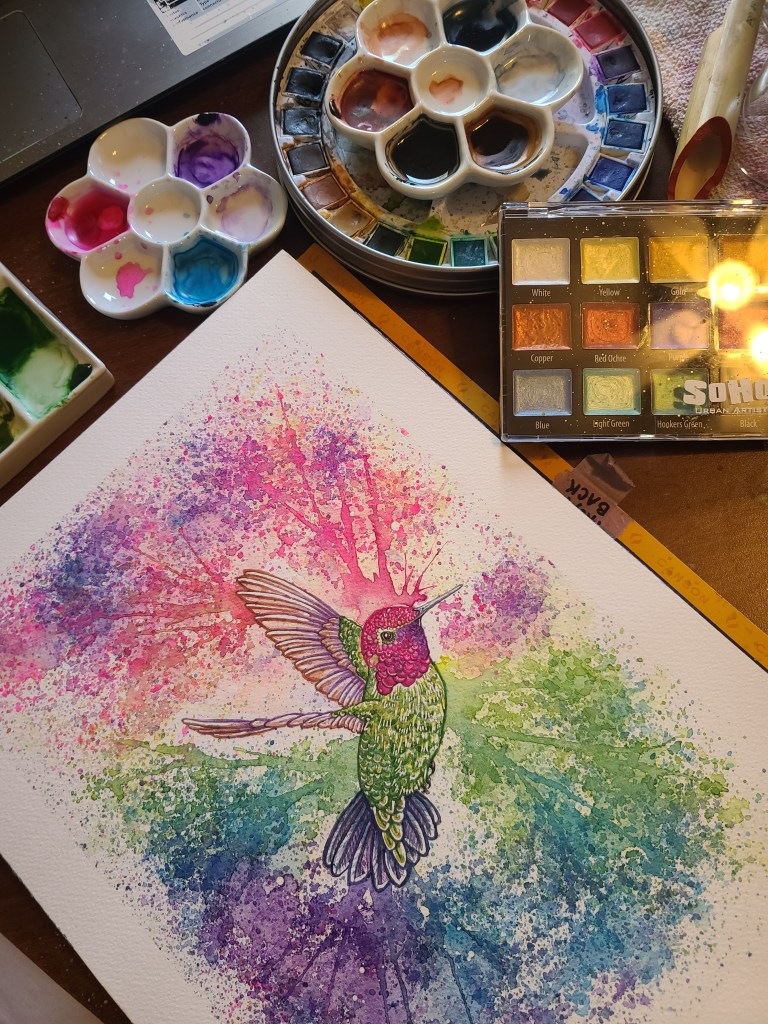
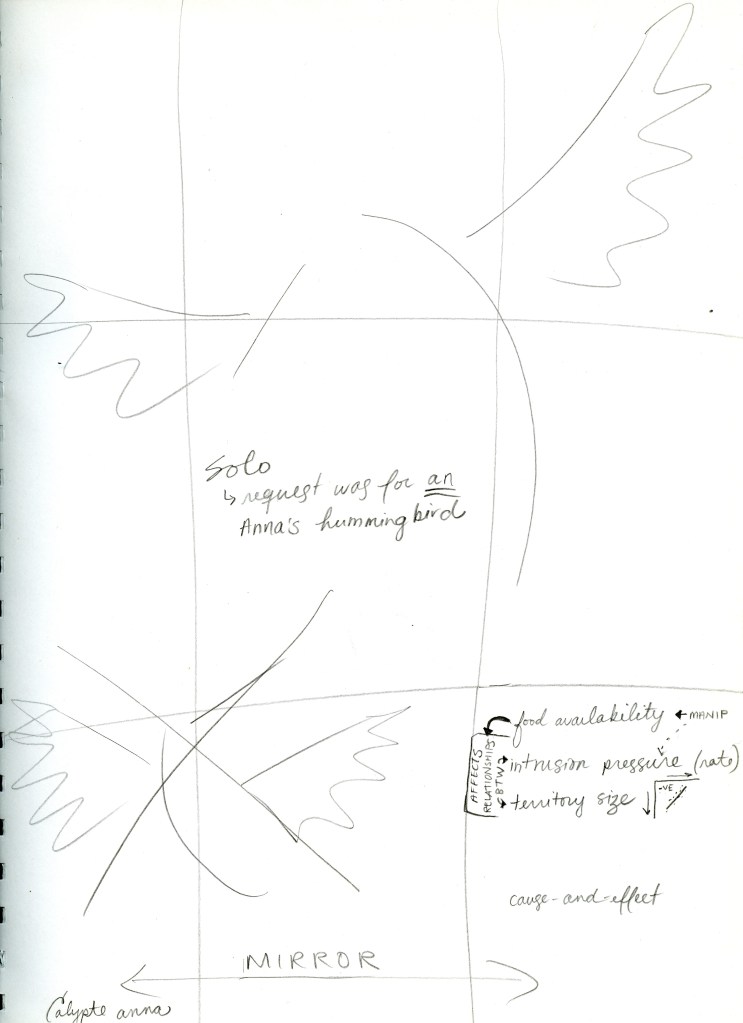
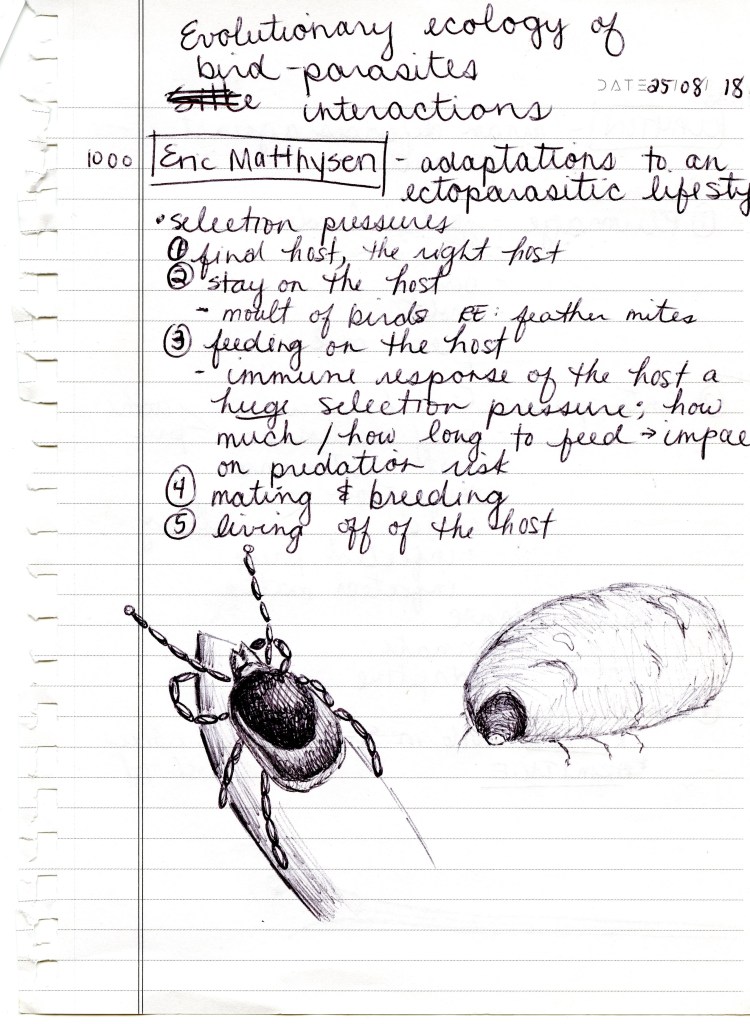
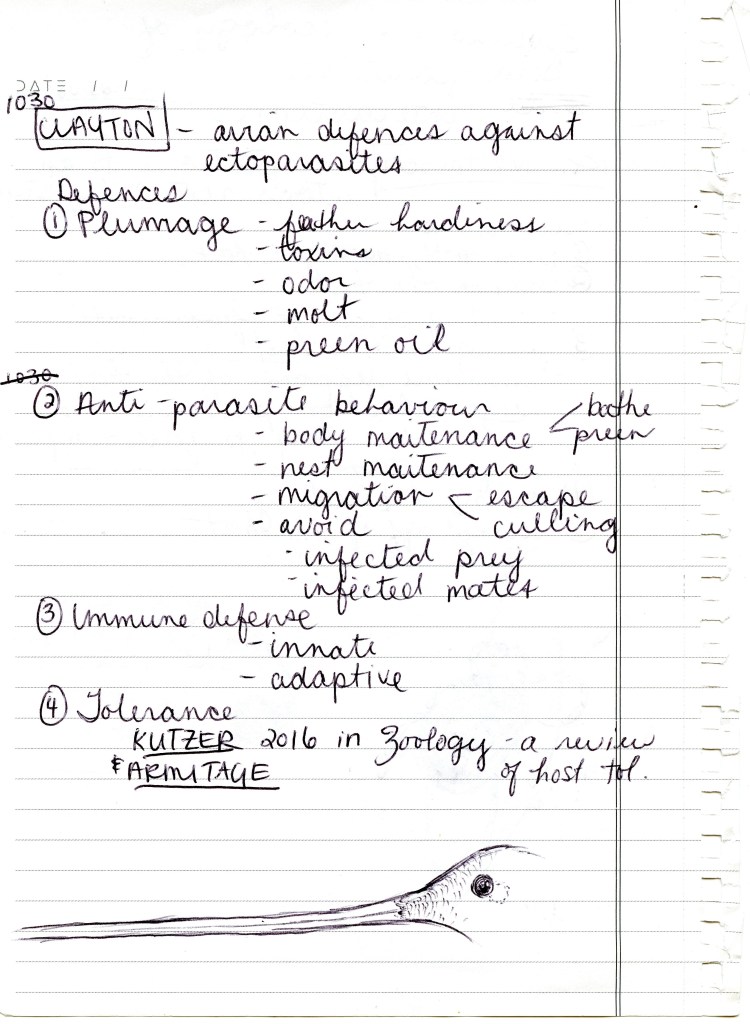
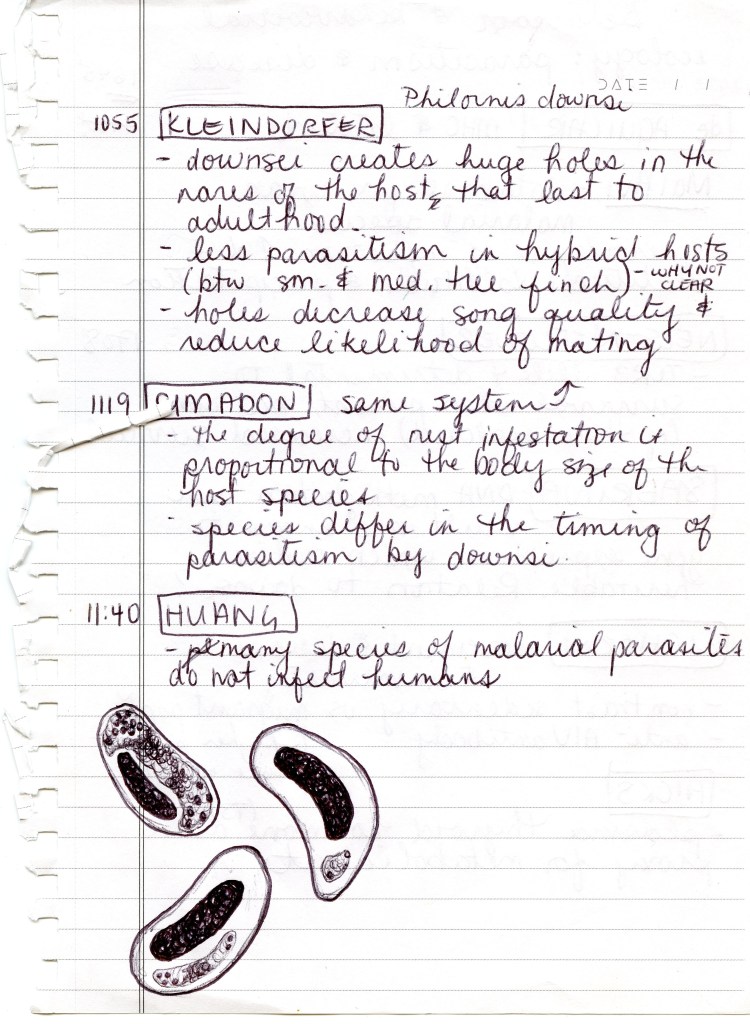
While I was jotting notes for this article in my journal, I came across sketches inspired by talks at a science conference. Sitting and listening for long periods of time can be difficult for me and doodling about the topic while I listen helps; a synergy I had forgotten, art and learning (Fig. 5). Indeed, art is an effective tool/catalyst to teach in the classroom, and scientific research publications use art to illustrate experimental designs and visualize data. I am thankful for the synergy of art and science in my life; they have reinforced each other, balanced each other, and make up a huge part of my identity. I hope readers feel inspired to look for ways that science and art can synergize for them.
Contact
tosha.r.kelly@gmail.com for correspondence and commissions
Art by Dr. Kelly can be viewed on Instagram: https://www.instagram.com/birdbraintosh/
Website (in need of updating): https://tosharkelly.wixsite.com/toshakelly
Twitter Handle: @BirdBrainTosh
Google Scholar: https://scholar.google.ca/citations?user=QEjCyFIAAAAJ&hl=en
Copyright
All images in this article are property of Dr. Tosha R. Kelly and are not available for reproduction in any form without the owner’s written consent.
Further Reading
Feltner, Linda Miller. Drawing Nature: The Creative Process of an Artist, Illustrator, and Naturalist, Princeton: Princeton University Press, 2024.

The importance of diversity, equity, and inclusion in research:
- “Ethnic diversity and creativity in small groups.” (McLeod et al. 1996)
- “Considerations for improving diversity, equity and inclusivity within research designs and teams.” (Asmal et al. 2022)
- “Diversity, equity, and inclusion in research teams: the good, the bad, and the ugly.” (Hattery et al. 2022)
- “Diversity makes better science.” (Medin and Lee 2012)
Acknowledgement
This article would not have transpired had I not received a copy of Drawing Nature from ICB’s Managing Editor, Suzanne Miller-?. Thank you for your support in both my scientific and artistic ventures.
References
Asmal L, Lamp G, Tan EJ. 2022. Considerations for improving diversity, equity and inclusivity within research designs and teams. Psychiatry Res 307.
Chiewitz O, Hevesy G. 1935. Radioactive indicators in the study of phosphorus metabolism in rats. Nature 136:754–55.
Ericsson KA, Krampe RT, Tesch-Romer C. 1993. The Role of Deliberate Practice in the Acquisition of Expert Performance, Psychological Review.
Hattery AJ, Smith E, Magnuson S, Monterrosa A, Kafonek K, Shaw C, Mhonde RD, Kanewske LC. 2022. Diversity, Equity, and Inclusion in Research Teams: The Good, The Bad, and The Ugly. Race Justice 12:505–30.
Hobson KA, Wassenaar LI. 1997. Linking breeding and wintering grounds of neotropical migrant songbirds using stable hydrogen isotopic analysis of feathers. Oecologia 142–48.
Karikó K, Kuo A, Barnathan ES. 1999. Overexpression of urokinase receptor in mammalian cells following administration of the in vitro transcribed encoding mRNA, Gene Therapy.
McLeod PL, Lobel SA, Cox TH. 1996. Ethnic diversity and creativity in small groups. Small Group Res 27:248–54.
Medin DL, Lee CD. 2012. Diversity Makes Better Science. Association for Psychological Science Presidential Column.
Mullis K, Faloona F, Scharf S, Saiki R, Horn G, Erlich H. 1986. Specific enzymatic amplification of DNA in vitro: The polymerase chain reaction. Cold Spring Harb Symp Quant Biol 51:263–73.
Weissman D, Ni H, Scales D, Dude A, Capodici J, Mcgibney K, Abdool A, Isaacs SN, Cannon G, Karikó K. 2000. HIV Gag mRNA Transfection of Dendritic Cells (DC) Delivers Encoded Antigen to MHC Class I and II Molecules, Causes DC Maturation, and Induces a Potent Human In Vitro Primary Immune Response 1. The Journal of Immunology 165:4710–17.
Williams DA, Lemischka IR, Nathan DG, Mulligan RC. 1984. Introduction of new genetic material into pluripotent haematopoietic stem cells of the mouse. Nature 310:476–80.
IOB publication :
No Guts About It: Captivity, But Not Neophobia Phenotype, Influences the Cloacal Microbiome of House Sparrows (Passer domesticus)
T R Kelly, A E Vinson, G M King, C R Lattin
Integrative Organismal Biology, Volume 4, Issue 1, 2022, obac010, https://doi.org/10.1093/iob/obac010
 Integrative Organismal Biology